


A Leave No Trace Travel Guide helps eco-conscious travelers minimize their environmental and cultural footprint. By following seven core principles—from planning ahead to respecting wildlife—and applying them to natural, cultural, and urban settings, travelers can protect destinations for future generations while supporting local communities.
Every year, millions of travelers pour into the world’s most beloved destinations. National parks see record-breaking visitor numbers. Ancient temples are worn down by foot traffic. Wildlife corridors shrink as informal trails multiply. The cumulative effect of well-meaning but uninformed tourism is enormous—and it’s accelerating.
That’s where the Leave No Trace Travel Guide comes in.
Leave No Trace (LNT) is a framework originally developed for outdoor recreation, but its principles apply far beyond backcountry hiking. They extend to cultural heritage sites, tribal festivals, local artisan markets, and everything in between. At its core, LNT is about one thing: leaving a place exactly as you found it—or better.
This guide walks you through all seven Leave No Trace principles, shows you how to apply them in both natural and cultural settings, and offers practical tips for making every trip more responsible. Whether you’re planning a solo trek through a national forest or attending one of the world’s most vibrant tribal cultural festivals, this resource will help you travel with intention.
The Seven Principles of Leave No Trace for Travelers
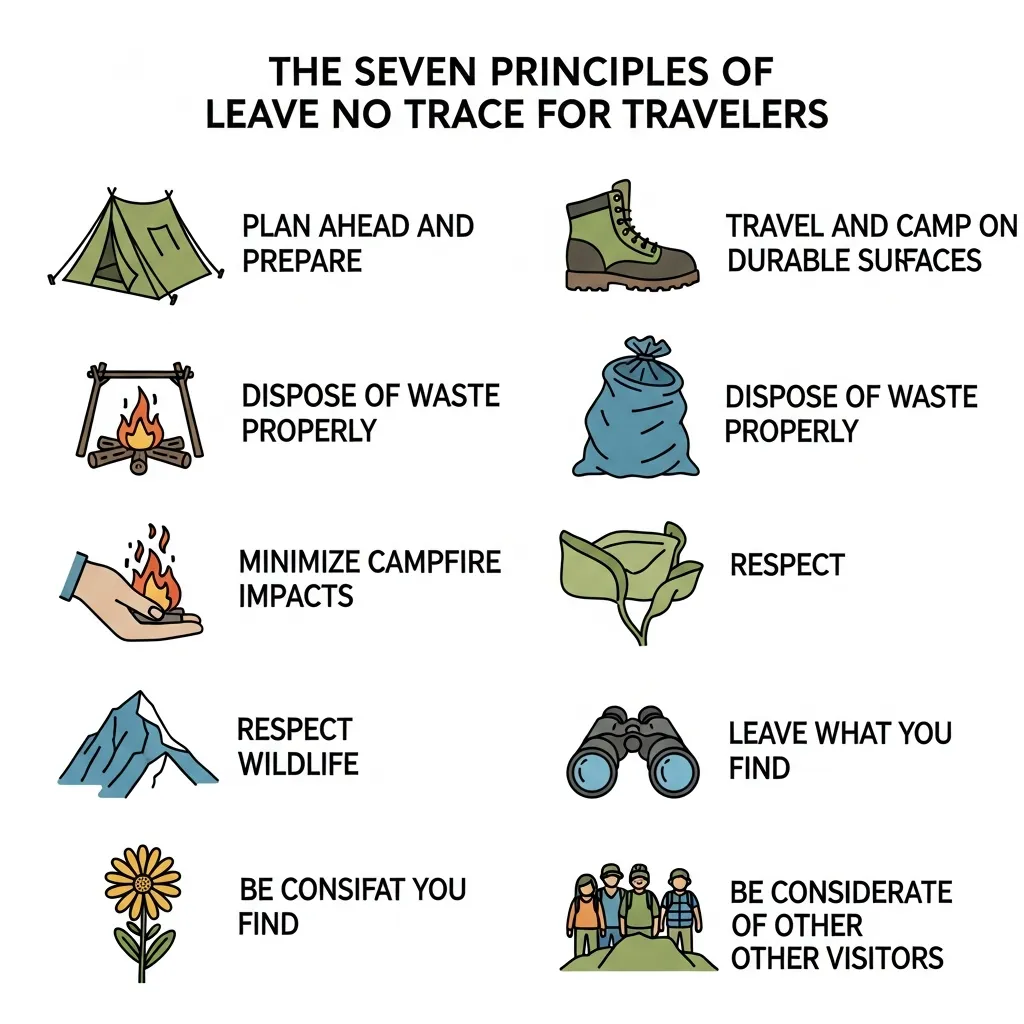
The Leave No Trace Center for Outdoor Ethics developed these seven principles as a science-based framework for minimizing recreational impact. They’re taught in ranger programs, scout training, and outdoor education curricula worldwide. Here’s how to put each one into practice.
Principle 1: Plan Ahead and Prepare
Good travel starts long before you arrive. Researching your destination thoroughly means you won’t accidentally trample a protected meadow, unknowingly visit a sacred site during a restricted period, or show up without the gear to handle local conditions.
What this looks like in practice:
- Check permit requirements and visitor caps before booking. Many protected areas, including Utah’s Wave formation and Peru’s Machu Picchu, require advance reservations.
- Pack reusable containers, a lightweight trowel for waste, and a water filtration system to reduce single-use plastic dependency.
- Learn local regulations around photography, drones, and off-trail exploration.
- Study weather patterns to avoid visiting during ecologically sensitive seasons, such as bird nesting or wildflower bloom periods.
Preparation isn’t just logistical—it’s also cultural. Before visiting indigenous communities or attending tribal cultural festivals, take time to understand local customs, taboos, and protocols.
Principle 2: Travel and Camp on Durable Surfaces
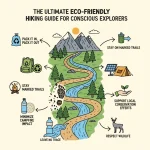
One of the most impactful habits a traveler can develop is sticking to established trails and designated campsites. Vegetation that looks resilient can take years—sometimes decades—to recover from repeated foot traffic.
Durable surfaces include rock, sand, dry grass, and compacted soil. When hiking in groups, spread out on wide trails to avoid widening paths. In fragile ecosystems like alpine meadows or coastal dunes, a single shortcut can permanently damage plant communities.
When choosing accommodation, prioritize eco-certified lodges and campsites that have already mitigated their environmental footprint. Look for certifications like Green Globe, Rainforest Alliance, or local equivalents.
Principle 3: Dispose of Waste Properly
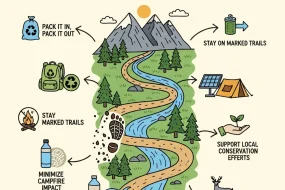
“Pack it in, pack it out” is the foundational rule of this Leave No Trace principle. Every piece of trash you carry in—food wrappers, water bottles, hygiene products—should leave with you.
Practical waste guidelines:
- Carry a dedicated “trash bag” in your daypack. Don’t rely on finding bins on the trail.
- Dispose of human waste at least 200 feet from water sources, trails, and campsites. Use a trowel to bury it 6–8 inches deep in a cathole.
- Never leave food scraps on the trail—even “natural” foods like fruit peels can disrupt local ecosystems and attract wildlife toward human activity zones.
- In urban or cultural settings, use designated local waste facilities and follow the destination’s specific recycling guidelines.
Principle 4: Leave What You Find
That beautiful shell on the beach. The ancient pottery shard near a ruin. The wildflower growing at the edge of the path. Leave them where they are.
Collecting natural or historical objects—even seemingly insignificant ones—degrades the experience for future visitors and can have real ecological or cultural consequences. In many countries, removing artifacts from archaeological sites is a criminal offense.
Photograph, don’t take. Observe, don’t disturb. This principle becomes especially relevant when following a Cultural Heritage Tourism Guide, where the artifacts and structures you encounter are irreplaceable.
Principle 5: Minimize Campfire Impacts
Campfires are one of the leading causes of wildfires in natural areas, and their impacts go beyond fire risk. Wood collection strips dead matter from forest floors, disrupting decomposer ecosystems that support soil health.
Before building a fire:
- Check whether fires are permitted in the area.
- Use existing fire rings where available rather than creating new ones.
- Burn only small pieces of wood and ensure the fire is completely extinguished before sleeping.
Better yet, opt for a lightweight camp stove. They’re more efficient, leave no trace, and work in conditions where open fires are banned.
Principle 6: Respect Wildlife
Wildlife observation is one of travel’s greatest gifts—but proximity is where things go wrong. Feeding animals, even accidentally, disrupts natural foraging behavior and can make animals dependent on human food sources. Animals that become “food conditioned” are often euthanized by park authorities.
Guidelines for responsible wildlife encounters:
- Maintain a minimum distance of 100 yards from large predators (bears, wolves) and 25 yards from other wildlife.
- Store food in bear canisters or hang bags in trees at campsites.
- Never pursue or corner animals for a photograph.
- Travel quietly to avoid startling nesting birds or resting mammals.
Protecting wildlife habitats also means making thoughtful choices about where you travel and when. Some destinations restrict visitor access during breeding seasons—respect those restrictions.
Principle 7: Be Considerate of Other Visitors
Leave No Trace extends to the humans sharing the trail with you. Noise pollution, crowding popular viewpoints, playing loud music, and monopolizing shared facilities all erode the quality of the experience for others.
Simple practices make a real difference:
- Yield to uphill hikers on narrow trails.
- Keep group sizes small in sensitive areas.
- Step off the trail to rest rather than blocking foot traffic.
- Keep voices low in wildlife areas and near cultural sites.
Beyond the Backcountry: Applying Leave No Trace to Cultural and Urban Environments
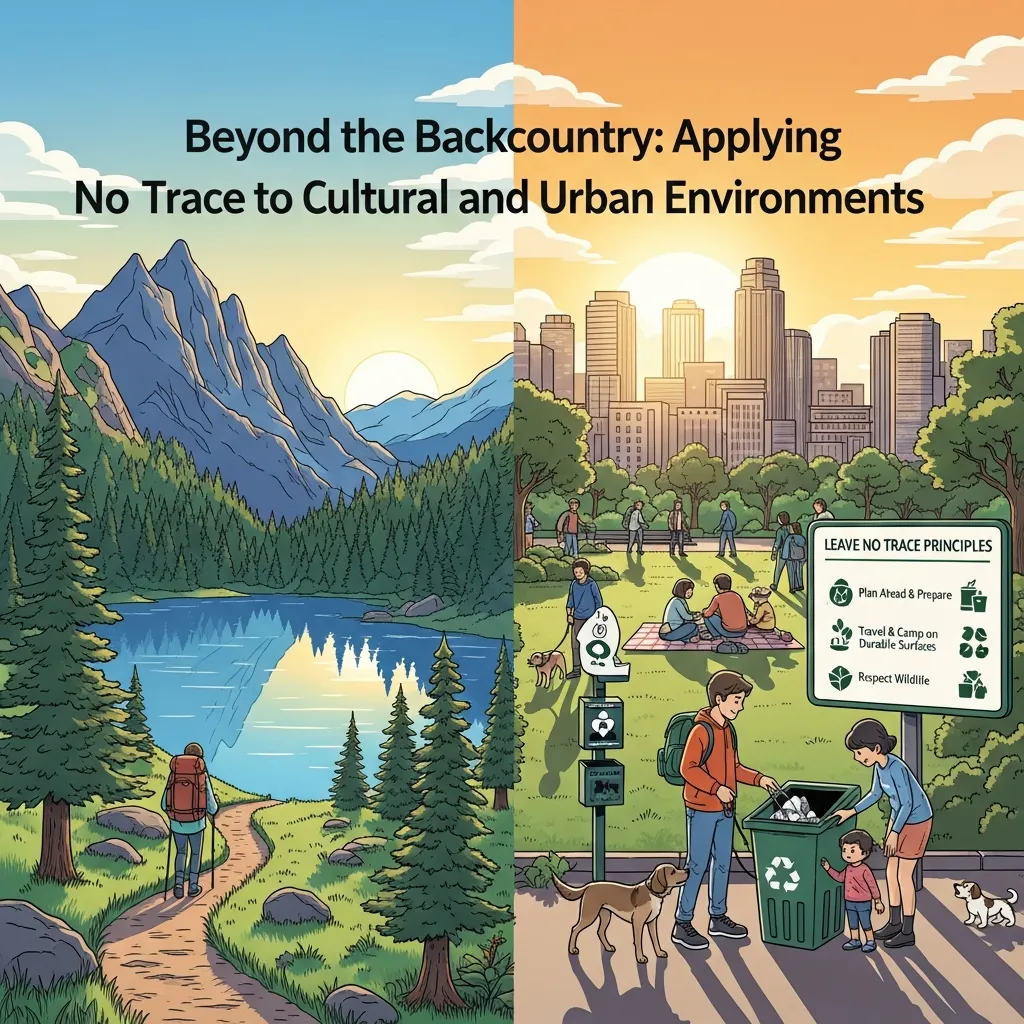
A Leave No Trace Travel Guide isn’t only for hikers and campers. The same principles of respect, preparation, and minimal impact apply to every type of travel—including visits to historical sites, festivals, and markets.
How to Navigate Cultural Heritage Tourism Responsibly
Cultural Heritage Tourism offers travelers the opportunity to engage with living traditions, ancient architecture, and diverse communities. Done well, it supports the preservation of these sites. Done poorly, it accelerates their degradation.
Practical tips for cultural heritage travel:
- Learn at least a handful of phrases in the local language. Even a simple greeting signals respect and opens doors.
- Research dress codes before visiting temples, mosques, churches, and other sacred sites. Many require covered shoulders and knees.
- Follow photography rules strictly. Some sites prohibit photography entirely; others restrict it in specific areas.
- Hire local guides rather than relying solely on apps or guidebooks. Local expertise supports the economy and adds context no algorithm can replicate.
How to Engage Respectfully with Tribal Cultural Festivals
Attending tribal cultural festivals is a profound travel experience—but it comes with specific responsibilities. Many indigenous festivals are ceremonial in nature, not performances designed for tourist consumption.
Before attending:
- Confirm that the event is open to outside visitors. Not all tribal ceremonies welcome guests.
- Ask permission before photographing individuals, rituals, or sacred objects. A “no” must always be respected.
- Participate only when invited. Observe quietly and attentively rather than inserting yourself into proceedings.
- Purchase directly from artisans and community members rather than third-party vendors who may not be connected to the community.
These practices honor indigenous sovereignty and ensure that your presence contributes to, rather than detracts from, the cultural integrity of the festival.
Responsible Shopping at Local Artisan Markets
Local Artisan Markets Travel is one of the most meaningful ways to engage with a destination’s culture—and one of the most direct ways to support its economy. According to the World Tourism Organization, tourism that channels revenue directly to local communities is significantly more effective at reducing poverty than large-scale resort tourism.
Responsible Shopping While Traveling at local markets:
- Prioritize handmade, locally sourced goods over mass-produced items sold as “local.”
- Ask vendors about the story behind their work. Understanding the craft deepens the purchase’s meaning and encourages authentic production.
- Bargain respectfully. Negotiation is culturally expected in many markets, but aggressive haggling over small amounts disrespects the artisan’s labor.
- Avoid purchasing items made from endangered species, ancient artifacts, or materials prohibited under international trade law (CITES regulations).
- Choose reusable bags or refuse packaging when possible to minimize waste at the market.
Responsible Shopping While Traveling isn’t about spending more—it’s about spending with intention.
The Environmental and Economic Benefits of Sustainable Tourism
Responsible travel isn’t just good for the environment—it’s good for economies and communities.
Biodiversity protection: Protected natural areas that receive well-managed tourism generate the funding and political will needed to maintain conservation programs. According to the International Ecotourism Society, ecotourism is one of the fastest-growing sectors of the global tourism industry, and communities that benefit financially from natural resources have greater incentives to protect them.
Supporting local livelihoods: When travelers choose locally owned accommodation, guides, restaurants, and markets, more of their spending stays within the destination community. This reduces economic leakage—the degree to which tourism revenue flows out to foreign-owned corporations.
Preserving cultural identity: Tourism that respects and values local traditions creates economic incentives for communities to maintain them. This is particularly significant for indigenous groups whose cultural practices face pressure from modernization and globalization.
Practical Tips for Your Next Responsible Adventure
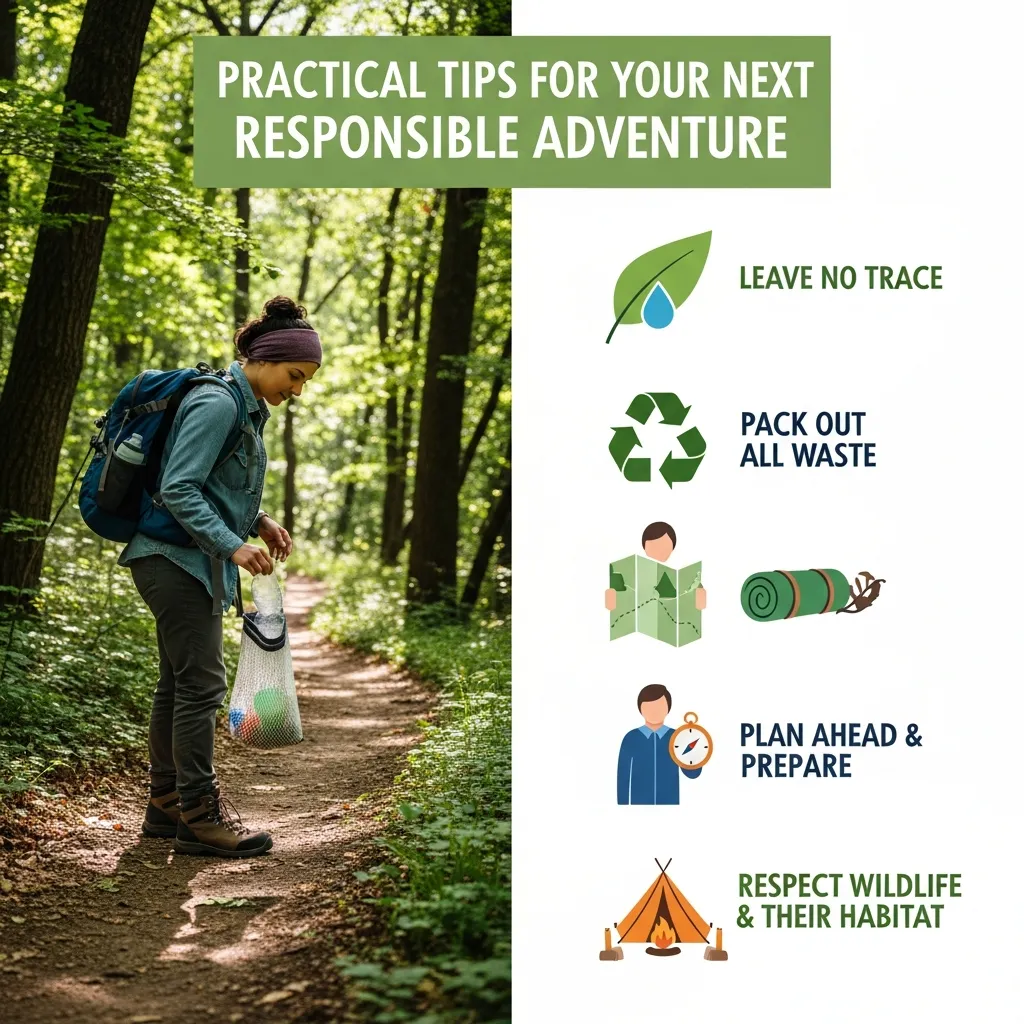
Before your next trip, run through this checklist:
- Transportation: Choose trains over planes where practical. If flying is necessary, offset emissions through verified programs like Gold Standard or Climate Action Reserve.
- Tour operators: Look for operators certified by organizations like the Global Sustainable Tourism Council (GSTC) or Rainforest Alliance.
- Plastic reduction: Pack a reusable water bottle with a filter, bamboo utensils, and a solid shampoo bar to eliminate most single-use plastic from your kit.
- Conservation contributions: Donate to or volunteer with local conservation organizations at your destination. Many parks and reserves accept direct contributions.
- Digital preparation: Download offline maps, park regulations, and cultural guides before departure to avoid excessive data use and stay informed in remote areas.
Small choices compound. A trip planned with these principles in mind leaves a fundamentally different footprint than one that doesn’t.
Conclusion
The Leave No Trace Travel Guide isn’t a set of restrictions—it’s a framework for deeper, more meaningful travel. When you plan carefully, tread lightly, respect the people and places you encounter, and spend your travel dollars with intention, you become part of the solution rather than the problem.
The seven LNT principles translate across every travel context, from remote wilderness camping to attending tribal cultural festivals, exploring cultural heritage sites, and shopping at local artisan markets. Responsible shopping while traveling, respectful engagement with indigenous communities, and careful waste management are not complicated—they simply require awareness and commitment.
The destinations that matter most to travelers are exactly the ones most vulnerable to the pressures of mass tourism. Protecting them is a shared responsibility. Your next trip is an opportunity to demonstrate what conscious travel looks like in practice.
Start with one principle. Build from there. The places you love will be better for it.
Frequently Asked Questions About the Leave No Trace Travel Guide
What is the Leave No Trace Travel Guide?
The Leave No Trace Travel Guide is a practical framework for eco-conscious travel built around seven core principles. It helps travelers reduce environmental and cultural impact while visiting natural areas, heritage sites, cities, and local communities.
Are Leave No Trace principles only for outdoor travel?
No. The Leave No Trace Travel Guide applies not only to wilderness trips but also to cultural tourism, local markets, tribal festivals, and urban travel. Its core message is to travel responsibly and leave as little negative impact as possible wherever you go.
How can I follow the Leave No Trace Travel Guide at cultural heritage sites?
When visiting heritage sites, the Leave No Trace Travel Guide encourages travelers to respect local rules, avoid touching artifacts, follow dress and photography guidelines, and support preservation by hiring local guides and learning cultural etiquette before arrival.
What does “pack it in, pack it out” mean for travelers?
In the Leave No Trace Travel Guide, “pack it in, pack it out” means taking all of your waste with you when you leave a place. That includes food packaging, tissues, and other personal items, even in areas where trash bins may not be available.
How should I behave at tribal cultural festivals?
The Leave No Trace Travel Guide recommends approaching tribal cultural festivals with respect and awareness. Ask permission before taking photos, follow community boundaries, and remember that these events are living cultural traditions—not just tourist attractions.
What are the best practices for responsible shopping while traveling?
According to the Leave No Trace Travel Guide, responsible shopping means supporting local artisans, choosing handmade or locally sourced goods, and avoiding products made from endangered wildlife or culturally sensitive materials. Your purchases should benefit the community, not exploit it.
How can I reduce plastic waste while traveling?
The Leave No Trace Travel Guide suggests carrying a reusable water bottle, refillable toiletries, reusable utensils, and a foldable shopping bag. Small swaps like these can greatly reduce plastic waste during your trip.
Is it okay to feed wildlife while traveling?
No. The Leave No Trace Travel Guide strongly advises against feeding wildlife because it disrupts natural behavior, harms ecosystems, and can create dangerous situations for both animals and people.
How can I find eco-friendly tour operators?
To follow the Leave No Trace Travel Guide, look for tour companies with sustainability certifications or clear responsible tourism practices. You can also read traveler reviews and ask operators directly how they support conservation and local communities.
What is the most important Leave No Trace principle for beginners?
For many first-time responsible travelers, the most important part of the Leave No Trace Travel Guide is planning ahead and preparing. When you understand local customs, site rules, and environmental risks before your trip, it becomes much easier to travel responsibly.


Sustainable Travel Advisor with over 10 years of experience designing eco-friendly itineraries and leading community-based tours worldwide. Holds a degree in Environmental Science and training in conservation. Writes about low-impact travel, protecting biodiversity, and creating authentic cultural experiences.







No Comments