



Cultural heritage tourism connects travelers to the authentic history, traditions, and living cultures of destinations worldwide. This Cultural Heritage Tourism Guide covers how to plan responsibly, engage meaningfully with local communities, shop ethically, and explore cultural landmarks—from Orleans Tourist Destinations to a full Hong Kong Travel Guide.
Every destination holds a story. Some are carved into ancient stone walls. Others live in the rhythm of a folk dance, the aroma of a street-food market, or the hands of an artisan weaving patterns passed down for centuries. Cultural heritage tourism is about seeking those stories—not the curated, packaged version, but the real thing.
Tourism has long been one of the world’s largest industries, but a growing segment of travelers now prioritizes depth over destinations. According to the UNWTO, cultural tourism accounts for roughly 40% of all international tourism. That number reflects a global shift: people want experiences that matter, connections that linger long after the flight home.
This Cultural Heritage Tourism Guide is built for that kind of traveler. Whether you’re planning a trip to the riverbanks of Orleans, navigating the layered heritage of Hong Kong, or hunting for handcrafted goods at a local artisan market, this guide will show you how to travel with intention, impact, and genuine curiosity.
You’ll find practical planning advice, ethical travel principles, destination-specific insights, and answers to the most common questions travelers ask before embarking on a culturally immersive journey.
What Is Cultural Heritage Tourism—and Why Does It Matter?
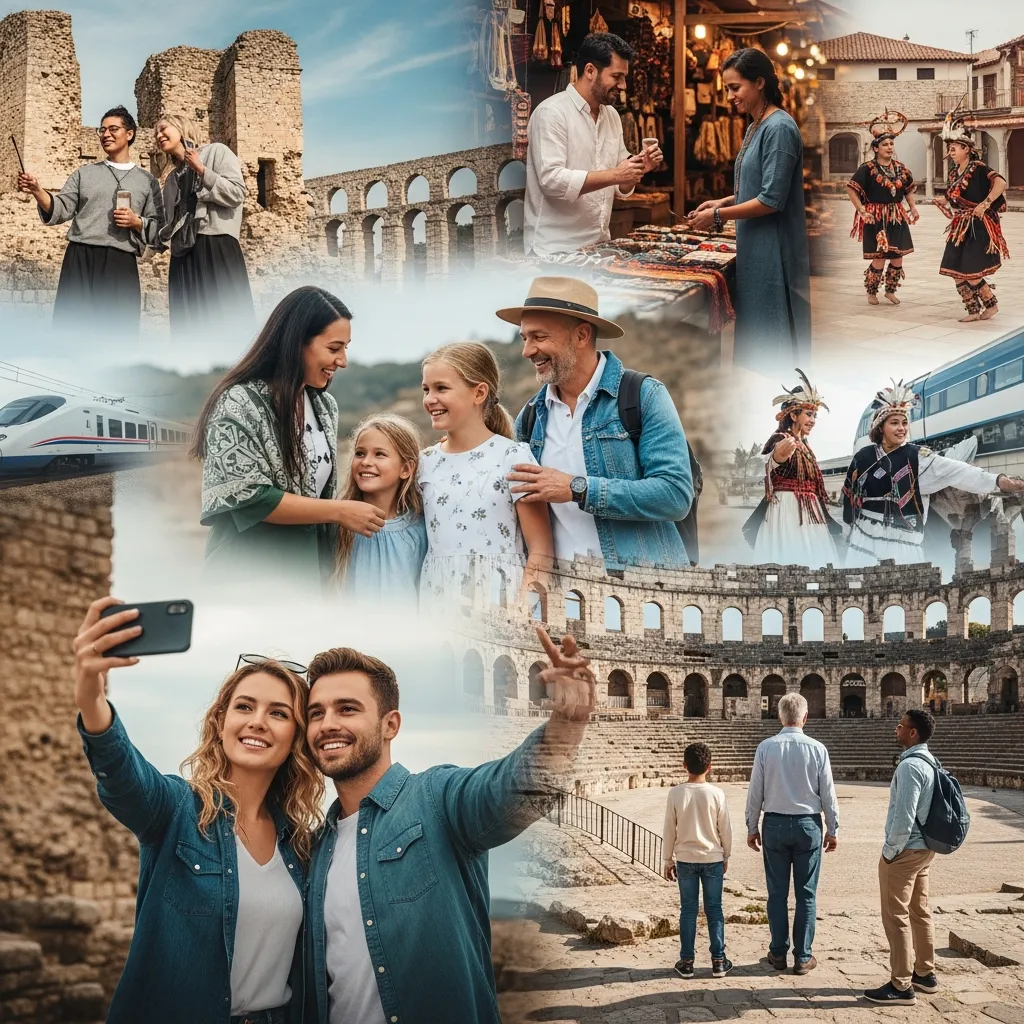
Cultural heritage tourism refers to travel that focuses on experiencing the historical, artistic, and cultural identity of a place. This includes visiting archaeological sites and UNESCO World Heritage locations, attending local festivals, learning traditional crafts, and dining on foods tied to centuries of culinary tradition.
Heritage itself is divided into two categories:
- Tangible heritage: Physical landmarks, monuments, historic buildings, artifacts, and archeological sites.
- Intangible heritage: Oral traditions, performing arts, rituals, festivals, and knowledge systems passed between generations.
Both forms are equally vital. A Cultural Heritage Tourism Guide that only covers monuments misses half the picture—because culture lives in people, not just in stone.
Why does it matter globally? Because tourism can either erode culture or protect it. When done responsibly, cultural heritage tourism generates revenue for local communities, funds the preservation of historic sites, and creates genuine cross-cultural understanding. When done carelessly, it contributes to over-tourism, cultural commodification, and irreversible damage to fragile sites.
The difference between the two outcomes often comes down to how travelers plan, choose, and behave.
The Benefits of Engaging in Cultural Heritage Tourism
How does cultural tourism deepen empathy and global understanding?
There’s no faster way to dismantle a stereotype than sitting across the table from someone whose daily life looks completely different from your own. Cultural heritage tourism creates those moments at scale.
Travelers who engage authentically with local communities—joining workshops, attending ceremonies with permission, learning a few phrases of the local language—return home with a different relationship to the world. Research published by the Global Commission on the Economy of Climate (2022) found that experiential and culturally immersive travel correlates strongly with increased civic engagement and intercultural tolerance.
How does cultural tourism support local economies?
Spending at locally owned guesthouses, restaurants, and markets funnels money directly into the community rather than into international hotel chains or tour conglomerates. When travelers follow a thoughtful Local Artisan Markets Travel Guide, they contribute to the livelihoods of craftspeople, farmers, and cultural practitioners whose income depends on sustained interest in their traditions.
UNESCO estimates that heritage tourism, when managed well, can account for up to 60% of economic activity in heritage-rich rural communities.
What are the personal growth benefits of cultural heritage travel?
Beyond economics and empathy, cultural travel changes people. Learning to cook a regional dish, navigating an unfamiliar transit system, or sitting through a performance in a language you don’t speak—these challenges build adaptability, patience, and a sharpened sense of perspective. Many travelers describe heritage travel as the most meaningful form of education they’ve ever encountered.
Planning Your Cultural Heritage Journey
How do you research authentic cultural experiences before traveling?
The key is to go beyond the top-ten lists. Start with UNESCO’s World Heritage Site database for landmark sites. Then dig into travel writing by local journalists, cultural organizations in your destination country, and community-run tourism boards.
For Responsible Shopping While Traveling, research artisan cooperatives and fair-trade-certified markets before you arrive. Many regions have cultural councils or nonprofit guides that list vetted experiences—where your money goes directly to practitioners rather than middlemen.
What are the best Orleans Tourist Destinations for cultural heritage travelers?
Orleans, France, offers a concentrated and deeply layered cultural heritage experience. The city is inseparable from the story of Joan of Arc, whose trial and legacy are commemorated across the old city through the Maison de Jeanne d’Arc and the Cathédrale Sainte-Croix—one of France’s most stunning Gothic cathedrals.
Orleans Tourist Destinations extend beyond monuments. The Loire Valley, of which Orleans is a gateway, is a UNESCO-listed cultural landscape celebrated for its Renaissance châteaux, vineyards, and centuries of royal French history. The city’s December Festival of Lights and its May Fêtes de Jeanne d’Arc attract cultural travelers seeking immersive historical experiences rather than passive sightseeing.
For the culturally curious, the local market at Les Halles Châtelet offers regional produce, cheeses, and wines—an ideal entry point into the culinary heritage that defines this part of the Loire.
How do you identify reputable tour operators and guides?
Accreditation matters. Look for operators certified by national tourism boards or affiliated with organizations like the Global Sustainable Tourism Council (GSTC). Ask directly: Who employs local guides? Where does the money from tour fees go? Is the operator partnered with any heritage preservation initiatives?
Red flags include tours that promise access to restricted sacred sites, operators who prioritize photo opportunities over cultural context, and agencies with no local staff or community relationships.
What sustainable and ethical travel practices should cultural tourists follow?
Sustainable cultural tourism rests on three principles: minimize harm, maximize benefit, and engage with respect.
Practically, this means:
- Staying in locally owned accommodations
- Hiring local guides rather than importing tour leaders from outside the destination
- Following all site-specific rules, dress codes, and photography restrictions
- Avoiding purchasing items made from protected materials (ivory, certain corals, etc.)
- Following a Fair Trade Tourism Guide when shopping for crafts and goods
Responsible Shopping While Traveling deserves its own focus. Buying handmade goods directly from artisans—or from certified cooperatives—is one of the most impactful ways to support cultural preservation financially.
Immersing Yourself in the Local Culture
What are the most effective ways to engage with local communities while traveling?
Learning even five to ten words in the local language signals respect and opens doors. Locals notice when visitors make the effort. Apps like Duolingo and Pimsleur can cover basics before departure, and a pocket phrasebook remains one of the most useful travel tools ever invented.
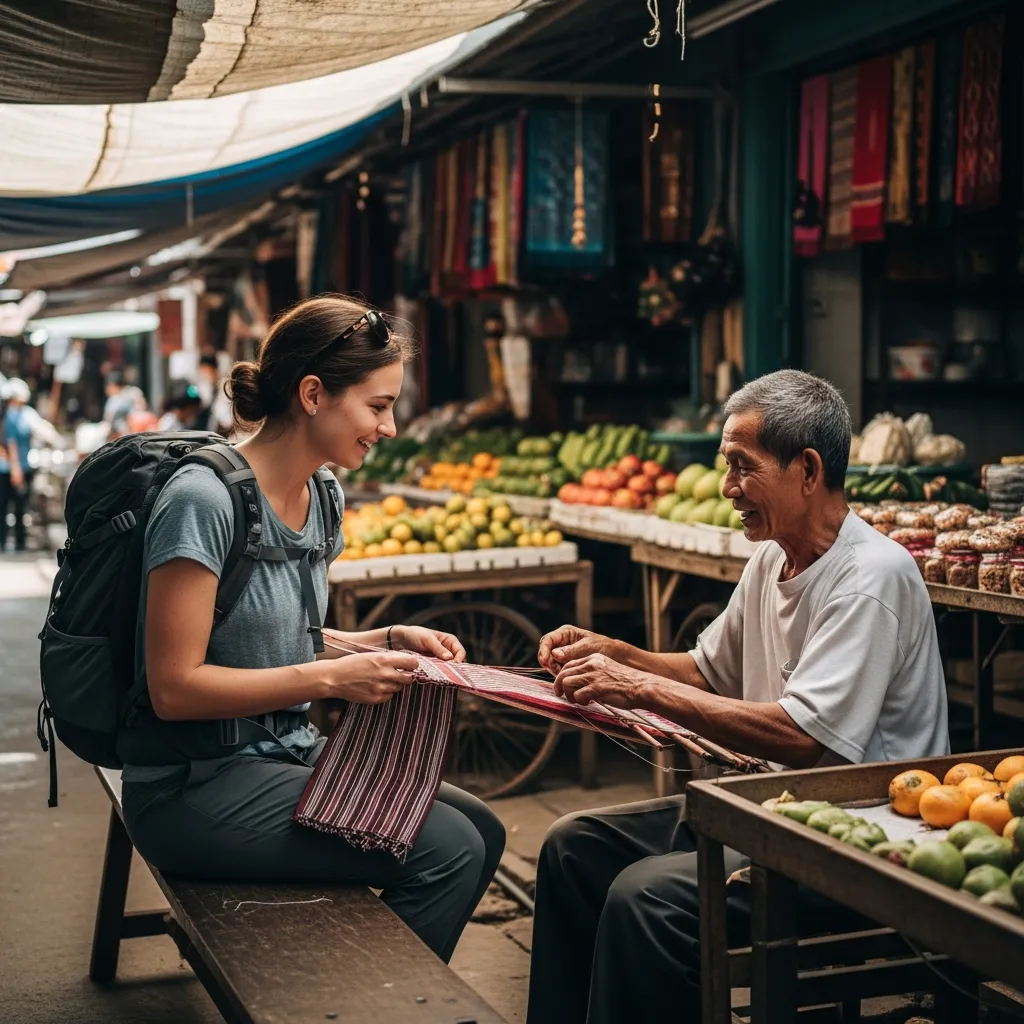
Beyond language, participation matters. Many cultural heritage destinations offer workshops in traditional crafts, cooking, music, and dance. These aren’t tourist shows—they’re genuine exchanges. Attending them funds local instructors and keeps traditional knowledge alive.
Dining with locals, whether through homestay programs, guided food tours led by community members, or simply eating where no menus are in English, produces the most authentic cultural engagement of any travel activity.
How should travelers explore historical sites respectfully?
Understanding context before arrival is the first step. Read about the historical significance of a site—its origins, its conflicts, its cultural meaning to the people whose ancestors built or used it. Many travelers arrive at sacred or historically charged sites without any background knowledge, which leads to unintentional disrespect.
On-site, follow every posted rule. Don’t touch what you’re asked not to touch. Don’t photograph people without permission. Don’t enter restricted areas, even if barriers appear minimal.
What is a Local Artisan Markets Travel Guide and how do you use one?
A Local Artisan Markets Travel Guide is a curated resource—often published by cultural councils, fair-trade organizations, or local tourism boards—that identifies markets where handcrafted goods are produced by local artisans and sold at fair prices.
The value of handcrafted goods extends beyond the object itself. A hand-woven textile or hand-thrown ceramic carries the cultural knowledge, aesthetic tradition, and economic contribution of its maker. Using a credible Local Artisan Markets Travel Guide helps travelers identify genuine craftsmanship versus mass-produced imitations sold as “local” goods.
Look for markets certified under Fair Trade Tourism Guide principles, which require transparent pricing, fair wages for artisans, and no use of child labor.
The Role of Technology in Cultural Heritage Tourism
How is technology enhancing access to cultural heritage experiences?
Digital storytelling and virtual tours have expanded access dramatically. Institutions like the British Museum, the Smithsonian, and the Palace Museum in Beijing now offer virtual walkthroughs that allow anyone—regardless of physical ability or financial means—to engage with major cultural collections.
Mobile apps like Google Arts & Culture, Bloomberg Connects, and Audio Eguide provide on-site audio guides, augmented reality overlays, and historical context that would previously require a professional guide. These tools enhance the experience without replacing human expertise.
Perhaps most significantly, digital preservation technologies—including 3D scanning, photogrammetry, and drone mapping—are being used to create permanent digital records of heritage sites threatened by climate change, conflict, or over-tourism. Organizations like CyArk have digitally preserved over 200 endangered heritage sites worldwide.
Challenges and Solutions in Cultural Heritage Tourism
What is the impact of over-tourism on cultural heritage sites?
Over-tourism is one of the most pressing threats facing cultural heritage destinations. Sites like Venice, Machu Picchu, and Angkor Wat have experienced structural degradation, community displacement, and cultural dilution as visitor numbers overwhelmed carrying capacity.
The solution requires action at multiple levels. Governments must implement visitor caps and timed entry systems. Tour operators must distribute itineraries across lesser-known destinations. Travelers must be willing to visit off-peak, explore secondary sites, and resist the social-media pressure to visit the same overcrowded landmarks.
How can cultural heritage tourism balance preservation with accessibility?
The most effective models involve local communities in governance. When residents have a direct voice in how their heritage is presented and monetized, outcomes improve—both for preservation and for traveler experience. Community-based tourism initiatives in countries like Rwanda, Peru, and Bhutan demonstrate that accessibility and preservation can coexist when local leadership is centered.
Case Studies in Cultural Heritage Tourism
How have ancient cities been revitalized through cultural tourism?
Oaxaca, Mexico, offers a compelling example. Once overshadowed by Mexico City and Cancún, Oaxaca leveraged its indigenous Zapotec heritage, renowned culinary traditions, and proximity to Monte Albán—one of Mesoamerica’s earliest cities—to build a thriving cultural tourism economy. Investment in artisan cooperatives and festival programming turned cultural authenticity into a sustainable development engine.
How is indigenous cultural heritage being protected through tourism?
New Zealand’s Māori-led tourism experiences represent a globally recognized model of indigenous heritage tourism done right. Operators like Te Puia and Mitai Māori Village are Māori-owned and operated, ensuring that cultural representation remains under community control. Revenue funds language revitalization programs and traditional arts education.
What does the Hong Kong Travel Guide reveal about modern cultural heritage tourism?
Hong Kong presents a fascinating case study—a city where East meets West in layers of accumulated history, colonial architecture, living Cantonese traditions, and one of the world’s most dynamic contemporary arts scenes.
A responsible Hong Kong Travel Guide would direct travelers to the Tai Kwun Centre for Heritage and Arts, a restored former police compound that now houses galleries, performance spaces, and heritage exhibitions. The Man Mo Temple on Hollywood Road, dating to 1847, remains an active place of worship alongside its role as a heritage site.
The Hong Kong Travel Guide would also highlight the city’s culinary heritage—dim sum culture, dai pai dong street food stalls, and the unique Cantonese-British fusion found in cha chaan teng (Hong Kong-style cafés). These everyday cultural experiences are as significant as any monument.
For Responsible Shopping While Traveling in Hong Kong, the PMQ creative hub connects visitors with local designers and craftspeople. It offers an authentic alternative to the luxury retail corridors that dominate most tourist itineraries.
Future Trends in Cultural Heritage Tourism
What are the emerging trends in cultural heritage tourism for 2025 and beyond?
Three trends are reshaping the landscape:
Personalized cultural experiences: Travelers increasingly want bespoke itineraries built around specific interests—culinary heritage, textile traditions, religious architecture, jazz history. Data-driven tour operators now build custom itineraries at scale.
Experiential travel over passive sightseeing: The demand for active participation—learning, creating, contributing—continues to outpace demand for conventional guided tours. Travelers want to leave a destination having made something, learned something, or contributed something.
Technology-enhanced engagement: Augmented reality interpretation at heritage sites, AI-powered translation for oral history archives, and immersive digital installations are becoming standard tools for heritage institutions. These technologies extend reach without compromising on-site integrity.
The Enduring Value of Cultural Exploration

Cultural heritage tourism is not a niche travel category. It’s a framework for engaging with the world honestly—acknowledging that every place carries history, every community holds knowledge worth encountering, and every traveler’s choices carry consequence.
This Cultural Heritage Tourism Guide has covered the full spectrum: from defining tangible and intangible heritage to navigating Orleans Tourist Destinations, building a practical Hong Kong Travel Guide itinerary, following Fair Trade Tourism Guide principles at local artisan markets, and practicing Responsible Shopping While Traveling.
The takeaway is straightforward. Travel better by traveling slower. Spend locally. Engage respectfully. Ask questions. Buy from makers, not middlemen. Use a credible Local Artisan Markets Travel Guide rather than wandering into the nearest souvenir shop.
Cultural heritage doesn’t need to be preserved behind glass. It needs to be visited, supported, and celebrated—by travelers who understand that being a guest in someone else’s cultural home is a privilege worth honoring.
Frequently Asked Questions (FAQ)
1. What is the main goal of a Cultural Heritage Tourism Guide?
A Cultural Heritage Tourism Guide helps travelers identify, access, and engage with the historical, artistic, and living cultural assets of a destination responsibly. The goal is to facilitate authentic, meaningful experiences while supporting local communities and heritage preservation.
2. How can I ensure I’m having an authentic cultural experience?
Book with locally owned operators, hire guides from the community, attend events not primarily designed for tourists, and use verified resources like cultural council publications or fair-trade directories. Avoid experiences that feel staged or where the primary audience is tourist groups rather than local participants.
3. What are some examples of tangible cultural heritage?
Tangible cultural heritage includes monuments, historic buildings, archaeological sites, artifacts, and cultural landscapes. Examples include the Cathédrale Sainte-Croix in Orleans, the Tai Kwun heritage complex in Hong Kong, and UNESCO-listed sites like the Loire Valley châteaux.
4. What does “Responsible Shopping While Traveling” mean?
Responsible Shopping While Traveling means purchasing goods that are locally produced, fairly priced, and ethically made. It involves buying directly from artisans or certified cooperatives, avoiding mass-produced imitations marketed as traditional crafts, and following Fair Trade Tourism Guide principles to ensure your spending benefits the maker.
5. How do Orleans Tourist Destinations contribute to cultural tourism?
Orleans Tourist Destinations offer access to some of France’s most significant historical and cultural heritage. From the Gothic grandeur of the Cathédrale Sainte-Croix to the UNESCO-designated Loire Valley, Orleans serves as a gateway to centuries of French royal history, culinary tradition, and living cultural festivals.
6. What are the benefits of using a Local Artisan Markets Travel Guide?
A Local Artisan Markets Travel Guide connects travelers to verified markets where goods are made and sold by local craftspeople. Benefits include supporting artisan livelihoods directly, accessing genuine traditional crafts rather than imported imitations, and contributing to the economic sustainability of cultural heritage communities.
7. Is a Hong Kong Travel Guide considered cultural heritage tourism?
Yes. A Hong Kong Travel Guide that covers heritage sites like Tai Kwun, Man Mo Temple, and the city’s Cantonese culinary traditions falls squarely within cultural heritage tourism. Hong Kong’s unique position as a city of layered Eastern and Western heritage makes it a rich destination for culturally motivated travelers.
8. How can I practice Fair Trade Tourism Guide principles while traveling?
Follow Fair Trade Tourism Guide principles by choosing certified accommodation and tour operators, paying fair prices for artisan goods rather than bargaining aggressively, tipping local service workers appropriately, and supporting businesses that demonstrate transparent community benefit and ethical labor practices.
9. What impact does over-tourism have on cultural heritage?
Over-tourism accelerates physical degradation of heritage sites, displaces local communities, distorts local economies, and dilutes the cultural authenticity that makes destinations meaningful. Sites like Machu Picchu and Venice have introduced visitor caps in response. Travelers can help by visiting off-peak, exploring lesser-known sites, and following all site management guidelines.
10. How can technology enhance cultural heritage tourism experiences?
Technology enhances cultural heritage tourism through mobile audio guides, augmented reality overlays at historic sites, virtual museum tours, and digital preservation projects that protect endangered sites. Apps like Google Arts & Culture and institutional platforms from major museums allow deeper engagement before, during, and after a visit.
11. What is the difference between tangible and intangible cultural heritage?
Tangible cultural heritage refers to physical objects and places—monuments, artifacts, historic districts. Intangible cultural heritage refers to living practices—oral traditions, performing arts, rituals, festivals, and traditional knowledge systems. Both categories require protection and engagement through responsible cultural tourism.
12. How do I find Fair Trade-certified artisan markets at my destination?
Search the directories maintained by Fair Trade International, the World Fair Trade Organization (WFTO), or regional fair-trade networks. National tourism boards often publish vetted Local Artisan Markets Travel Guides as well. In many destinations, local cultural councils or NGOs maintain updated lists of ethically certified markets and cooperatives.


Sustainable Travel Advisor with over 10 years of experience designing eco-friendly itineraries and leading community-based tours worldwide. Holds a degree in Environmental Science and training in conservation. Writes about low-impact travel, protecting biodiversity, and creating authentic cultural experiences.








No Comments