


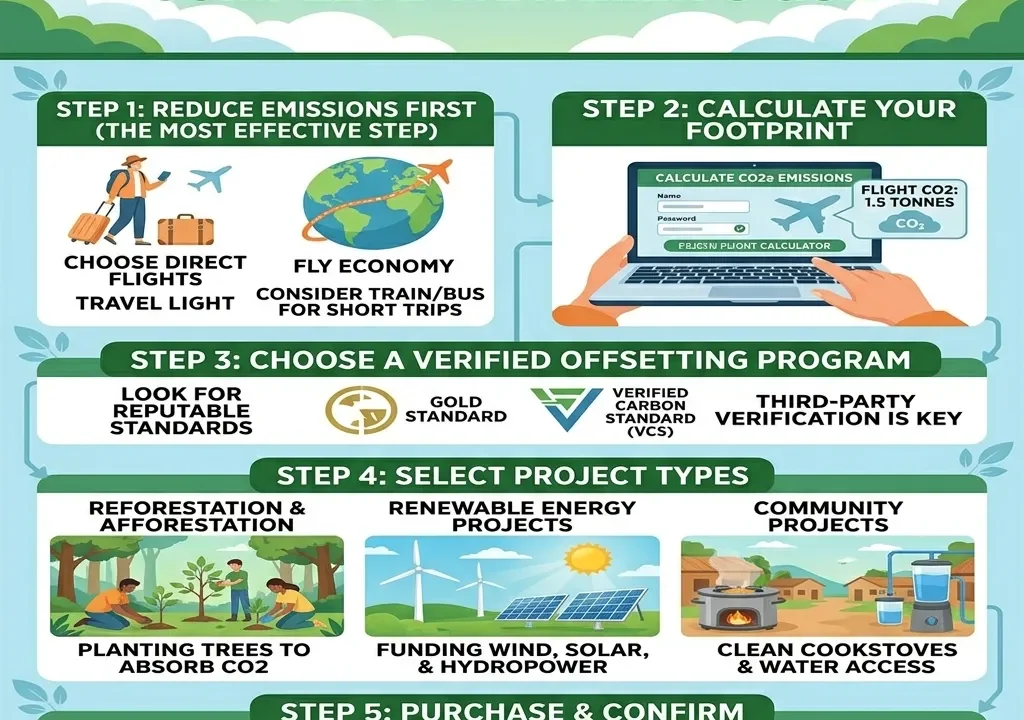
Flying is one of the most carbon-intensive things most travelers do, which is why more people are looking into how to offset flight emissions before and after they book a trip. This guide covers exactly how to offset flight emissions step by step — calculating your flight’s carbon footprint, choosing a verified offset program, and understanding what carbon offsets actually do (and don’t do). Whether you fly once a year or several times a month, learning how to offset flight emissions properly is one of the most practical ways to reduce your travel footprint without giving up travel altogether.
Why Flight Emissions Matter for Travelers
Aviation accounts for a meaningful share of global transportation emissions, and a single long-haul flight can generate more CO2 per passenger than many people produce in months of everyday activities. That’s exactly why understanding how to offset flight emissions has become a standard part of responsible trip planning for eco-conscious travelers.
Unlike some sustainability efforts that require major lifestyle changes, learning how to offset flight emissions is something you can act on directly at the point of booking, with tools and programs designed specifically for this purpose. It won’t eliminate the impact of flying, but it’s one of the most accessible ways travelers can take responsibility for the emissions their trips generate.
Calculate Your Flight’s Carbon Footprint
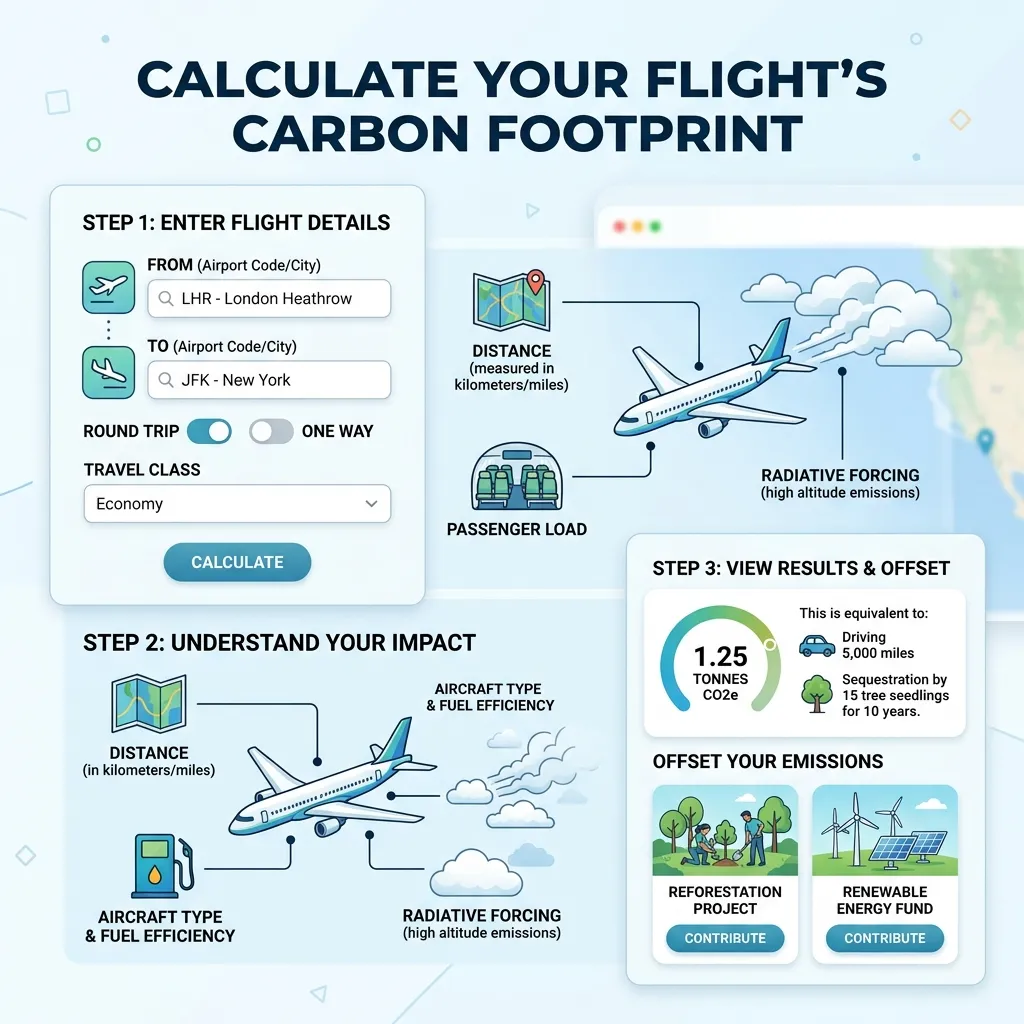
Before you can offset anything, you need to know roughly how much CO2 your flight actually produces. This is the essential first step in how to offset flight emissions accurately rather than guessing.
What affects your flight’s carbon footprint:
- Distance traveled — longer flights produce more total emissions, though takeoff and landing are disproportionately carbon-intensive per mile
- Cabin class — business and first class seats take up more space, which means a higher per-passenger emissions share
- Aircraft type and age — newer, more fuel-efficient planes produce less CO2 per passenger than older models
- Number of layovers — additional takeoffs and landings increase your total footprint compared to a direct flight
For a detailed walkthrough of the calculation itself, our guide to calculating your travel carbon footprint covers the specific formulas and tools travelers use to get an accurate number before offsetting.
Typical range: A round-trip domestic flight might generate 0.2–0.5 metric tons of CO2 per passenger, while a long-haul international round trip can generate 1.5–3 metric tons or more, depending on class and route.
Understand What Carbon Offsets Actually Do
Before diving into how to offset flight emissions in practice, it helps to understand what you’re actually paying for. A carbon offset represents a reduction or removal of greenhouse gases elsewhere — funding a project like reforestation, renewable energy, or methane capture — equal to the amount of CO2 your flight produced.
Important nuance: Offsetting doesn’t erase your flight’s emissions from the atmosphere. It funds an equivalent reduction somewhere else, which is why offsets are best understood as a mitigation tool, not a way to make flying carbon-neutral in a literal sense.
This distinction matters because it shapes how travelers should think about offsets — as one part of a broader effort to reduce travel impact, not a complete solution on its own.
Choose a Verified Offset Program
Not all carbon offset programs are created equal, and this step is where most people get how to offset flight emissions wrong. Low-quality offset projects can overstate their impact or fail to deliver the promised reductions at all.
What to look for in a credible offset program:
- Third-party verification through standards like Gold Standard, Verra (VCS), or the Climate Action Reserve
- Additionality — proof that the project wouldn’t have happened without offset funding
- Permanence — especially important for forestry projects, which need long-term protection to lock in claimed reductions
- Transparency — clear reporting on where your money goes and what project it funds
Types of offset projects to consider:
- Renewable energy projects (wind, solar) that displace fossil fuel electricity
- Verified reforestation and afforestation projects
- Methane capture from landfills or agricultural operations
- Direct air capture and carbon removal technology, for travelers seeking newer, more permanent solutions
The Gold Standard registry is one of the most widely respected certification bodies for verifying that offset projects deliver real, measurable, and additional emissions reductions.
Buy Offsets at the Right Time
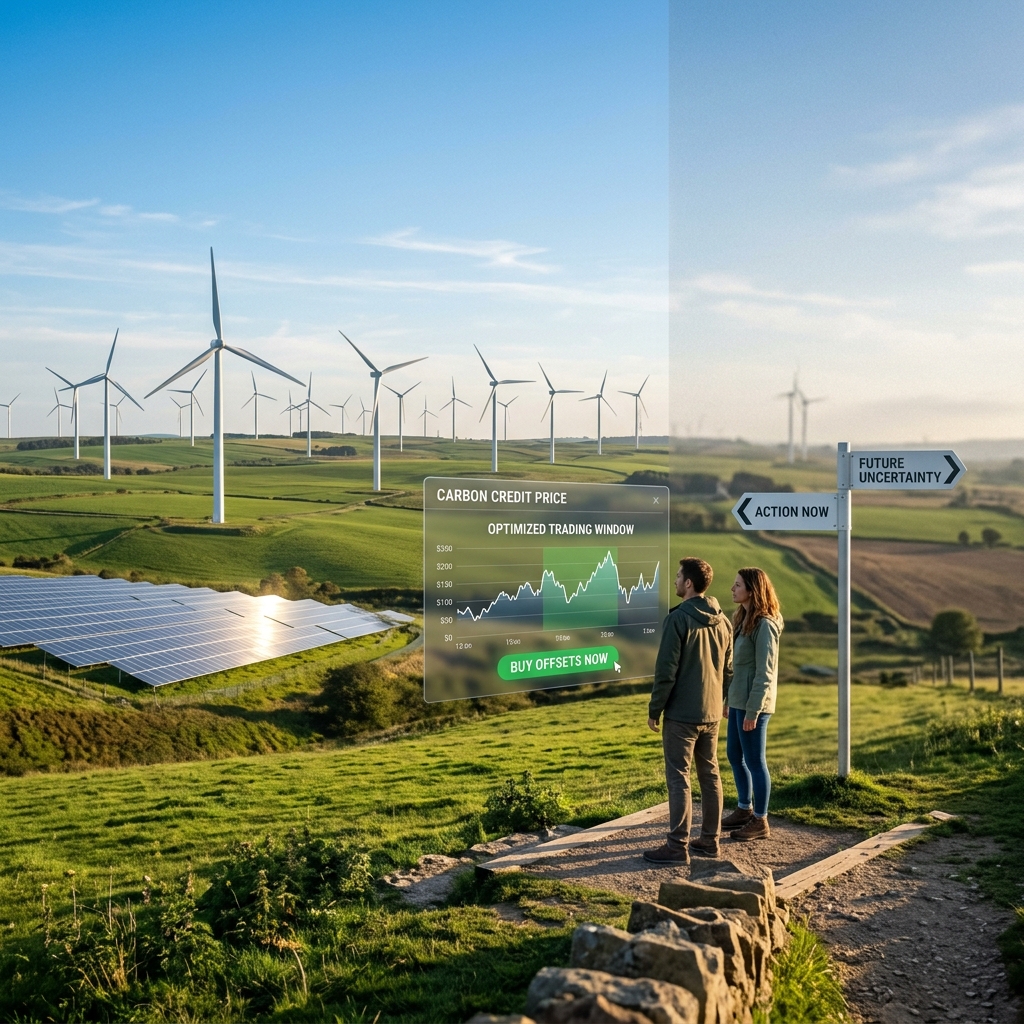
You can offset flight emissions either at the point of booking or after the trip, and both approaches work, though timing affects convenience and accuracy.
At booking: Many airlines now offer built-in offset options during checkout, calculated automatically based on your route and cabin class. This is the most convenient method, though airline-run programs vary widely in transparency and project quality.
After the trip: Independent offset providers let you calculate your actual flight emissions after booking and purchase offsets separately, often with more transparency into which specific project your money supports.
Which is better: Independent, third-party verified offset providers generally offer more transparency and project variety than airline-bundled options, even though airline checkout offsets are more convenient in the moment.
Reduce Before You Offset
Offsetting works best as a last step, not a first one. Before calculating how to offset flight emissions, it’s worth considering whether the emissions can be reduced in the first place.
Ways to reduce flight emissions before offsetting:
- Choose direct flights over connections when possible, since takeoff and landing produce disproportionate emissions
- Fly economy class instead of business or first class when feasible
- Consider train travel for shorter regional trips where a comparable rail option exists
- Combine multiple destinations into fewer, longer trips instead of frequent short flights
- Choose airlines with newer, more fuel-efficient fleets
Our guide on carbon-neutral vacation travel tips expands on these reduction strategies beyond flights alone, covering accommodations and ground transportation as well.
Step 6: Look Beyond Flight Offsets
Learning how to offset flight emissions is often the entry point into a broader look at travel’s environmental impact. Flights are usually the single largest emissions source in a trip, but ground transportation, accommodation energy use, and daily activities all contribute too.
For travelers wanting to reduce their footprint across an entire trip — not just the flight — our guide to zero-emission travel and green transportation covers lower-carbon options for getting around once you’ve landed.
How Much Does It Actually Cost to Offset a Flight?
One reason more travelers are learning how to offset flight emissions is that the cost is often lower than expected relative to the total price of a trip. Offset pricing depends on the calculated emissions of your flight and the type of project you’re funding.
| Flight Type | Approx. Emissions (per passenger) | Typical Offset Cost |
|---|---|---|
| Short domestic flight (under 500 miles) | 0.1–0.2 metric tons CO2 | $2–$5 |
| Medium domestic/regional flight | 0.3–0.6 metric tons CO2 | $5–$12 |
| Long-haul international (economy) | 1.5–2.5 metric tons CO2 | $15–$30 |
| Long-haul international (business/first) | 3–6+ metric tons CO2 | $30–$60+ |
These figures vary by provider and project type, but they illustrate a useful point: offsetting even a long-haul international flight typically costs less than a single checked bag fee on many airlines, making it one of the more accessible sustainability actions available to travelers.
Building Offsetting Into Your Travel Habits

Learning how to offset flight emissions once is useful, but the real impact comes from making it a consistent part of how you book travel going forward.
A simple system to make offsetting automatic:
- Calculate emissions at booking, using a flight carbon calculator before or right after you purchase your ticket.
- Set a standing offset provider you trust, rather than researching a new one for every trip.
- Budget offset costs into your trip planning, the same way you’d budget for baggage fees or travel insurance.
- Track your annual flying to understand your cumulative footprint, not just individual trips.
- Revisit your provider choice periodically, since offset program quality and verification standards can change over time.
Travelers who build this into a habit tend to find that offsetting becomes a minor, predictable line item rather than a decision they have to make — and research — every single time they fly.
- “Offsetting makes my flight carbon-neutral.” Offsets fund equivalent reductions elsewhere; they don’t erase the emissions your flight actually produced.
- “All offset programs are equally effective.” Quality varies enormously, which is why third-party verification matters more than price when choosing a program.
- “Offsetting is only worth it for long-haul flights.” Even short domestic flights benefit from offsetting, since the total footprint still adds up across multiple trips per year.
- “Airline offset programs are the best option.” They’re the most convenient, but independent, verified programs often provide more transparency and project choice.
- “Offsetting means I don’t need to reduce my flying.” Offsetting works best alongside reduction efforts, not as a replacement for them.
Conclusion
Understanding how to offset flight emissions gives travelers a practical, actionable way to take responsibility for one of the most carbon-intensive parts of modern travel. The process comes down to a few clear steps: calculate your flight’s actual footprint, choose a credible, third-party verified offset program, and treat offsetting as one part of a broader effort that also includes reducing emissions where you can. No single action makes flying carbon-neutral, but learning how to offset flight emissions properly — and pairing it with smarter travel choices — is one of the most meaningful steps any traveler can take toward lowering their impact without giving up the trips that matter to them.
Frequently Asked Questions
1. How much does it cost to offset flight emissions?
Costs vary by provider and project type, but offsetting a typical long-haul round-trip flight often ranges from $10 to $40, depending on the calculated emissions and program quality.
2. Are airline carbon offset programs reliable?
They vary. Some airlines partner with verified, third-party-certified projects, while others offer less transparency, so it’s worth checking which program and standard they use.
3. What’s the difference between carbon offsetting and carbon neutral?
Carbon offsetting funds equivalent emissions reductions elsewhere, while “carbon neutral” implies a net-zero impact — a claim that depends heavily on offset quality and shouldn’t be taken at face value.
4. Can I offset flight emissions after I’ve already flown?
Yes, most independent offset providers let you calculate emissions and purchase offsets for past flights, not just future ones.
5. What certification should I look for in a carbon offset program?
Gold Standard and Verra (VCS) are two of the most widely respected third-party verification standards for carbon offset projects.
6. Does flying economy really produce fewer emissions than business class?
Yes, because business and first-class seats take up significantly more cabin space per passenger, which increases their share of the flight’s total emissions.
7. Is it better to offset with reforestation projects or renewable energy projects?
Both can be effective, but renewable energy projects generally offer more immediate and measurable reductions, while forestry projects require long-term monitoring to ensure permanence.
8. How do I calculate the exact carbon footprint of my flight?
Several online calculators use flight distance, aircraft type, and cabin class to estimate CO2 output per passenger, giving you a number to base your offset purchase on.
9. Do direct flights really produce fewer emissions than connecting flights?
Yes, because takeoff and landing are the most fuel-intensive parts of a flight, so each additional layover adds a disproportionate amount of emissions.
10. Is carbon offsetting enough to make my travel sustainable?
Offsetting helps mitigate impact, but it works best alongside other reduction strategies rather than as a standalone solution to sustainable travel.
11. Can businesses offset flight emissions for employee travel?
Yes, many companies now purchase offsets as part of corporate sustainability programs, either through airline partnerships or independent verified providers.
12. How do I know if an offset program is legitimate?
Look for third-party verification (Gold Standard or Verra), transparent project reporting, and clear evidence of additionality before purchasing offsets from any provider.


Sustainable Travel Advisor with over 10 years of experience designing eco-friendly itineraries and leading community-based tours worldwide. Holds a degree in Environmental Science and training in conservation. Writes about low-impact travel, protecting biodiversity, and creating authentic cultural experiences.









No Comments